

This is a twelve-day spring photography tour of New Zealand’s South Island, travelling from Queenstown to Nelson with tuition from four New Zealand photographers. For the first five days, Glen Howey and Ben Wallbank lead our Night Sky & Landscape Photography Workshop, based at The Hermitage inside Aoraki Mount Cook National Park and the Aoraki Mackenzie International Dark Sky Reserve, before two nights in Christchurch and a day at Akaroa on Banks Peninsula. Ken Wright and Matthias H. Risse then take you through the coastal half of the tour: Kaikōura, a day crossing the Marlborough Sounds, and Golden Bay. Ken’s seascape work is built on a deep understanding of coastal light, and Matthias brings a technical eye to how landscape and nature come together. Groups are no more than eight.

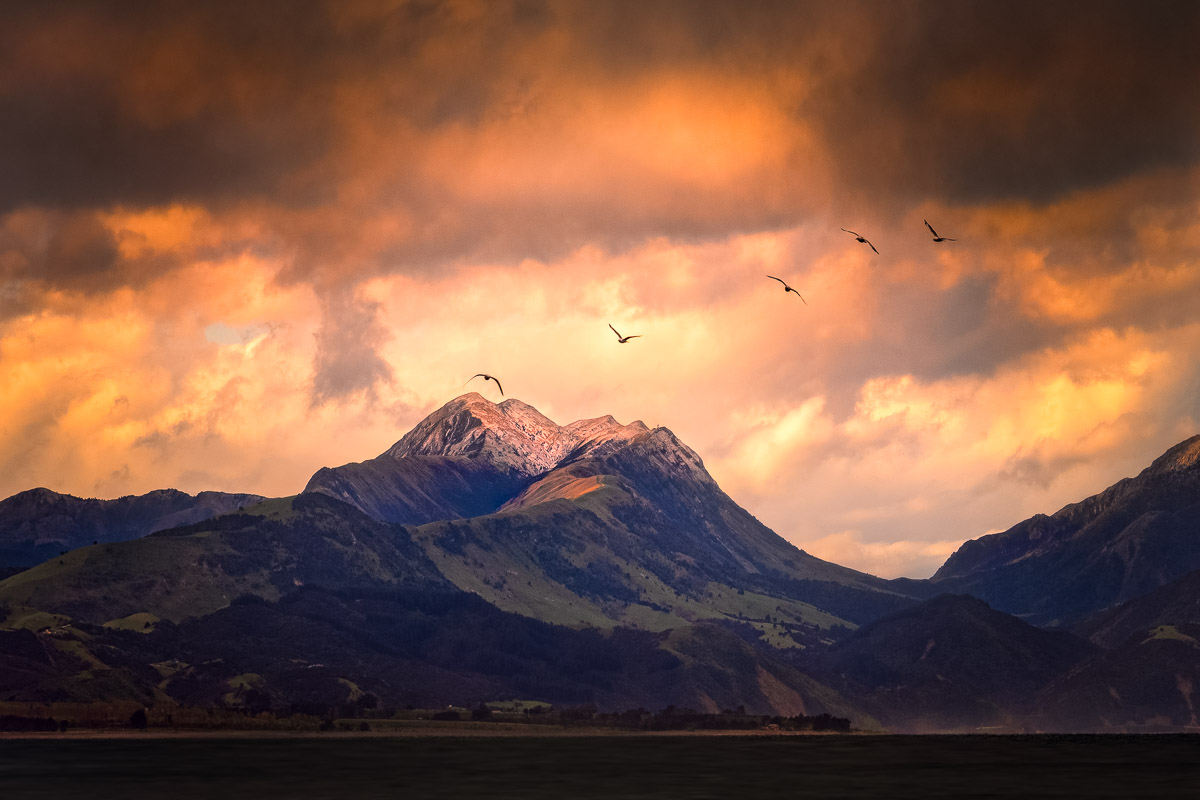
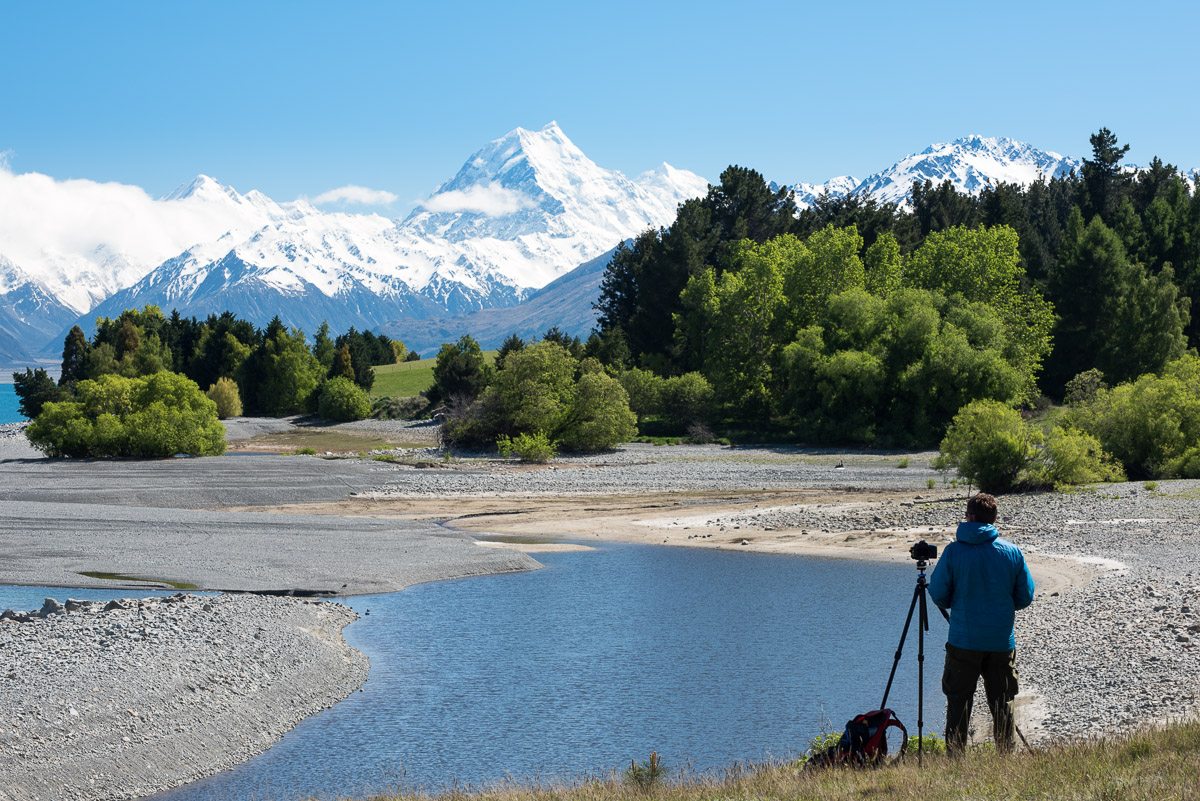
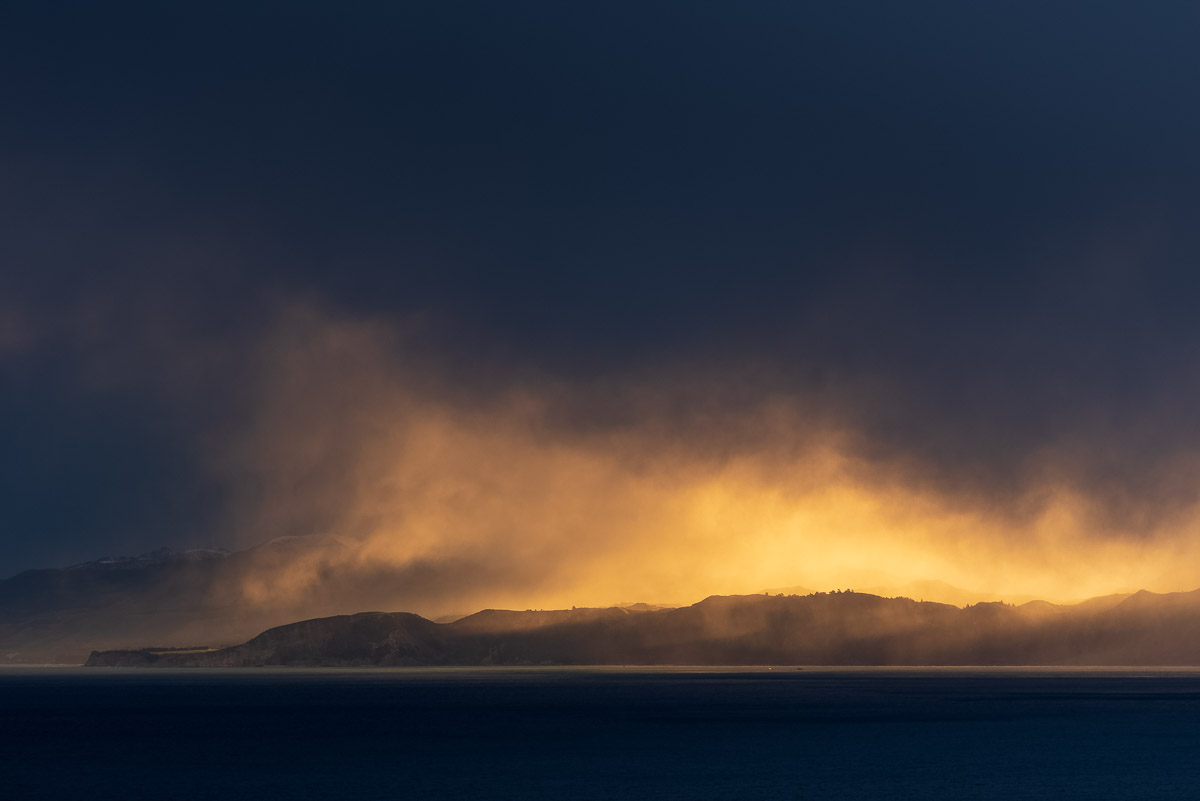
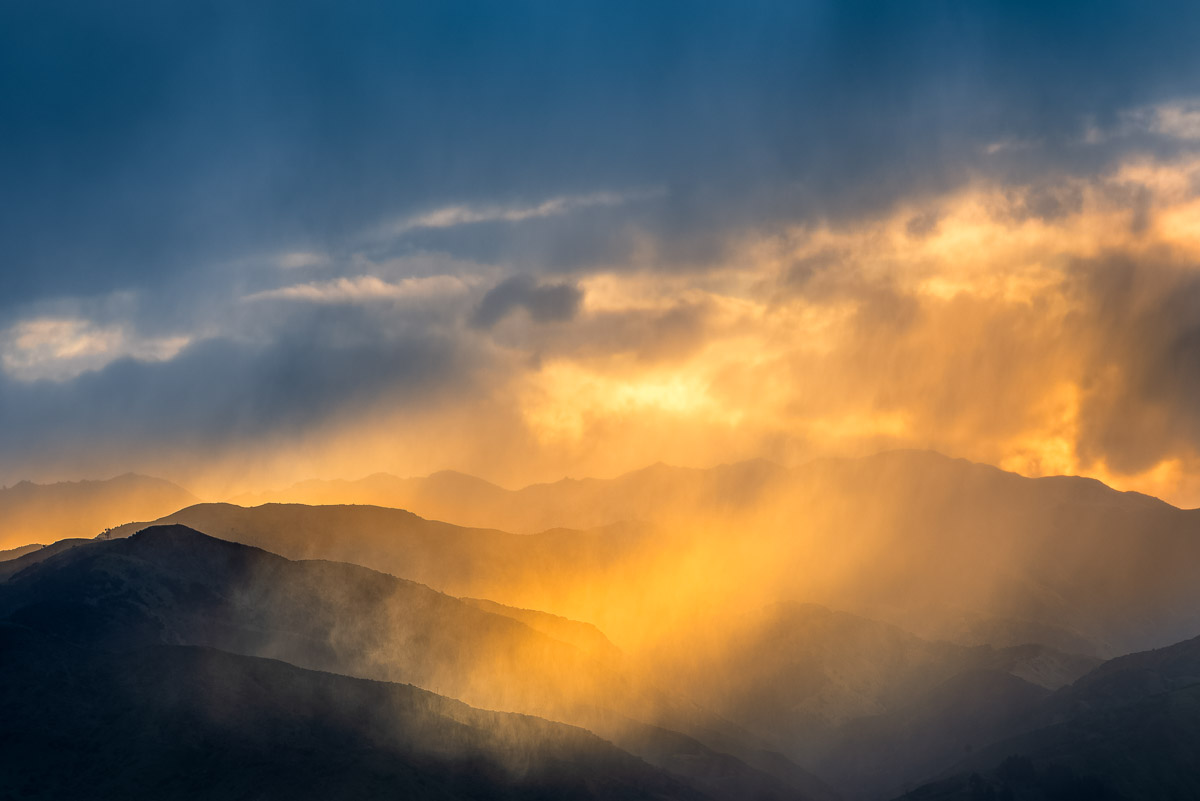
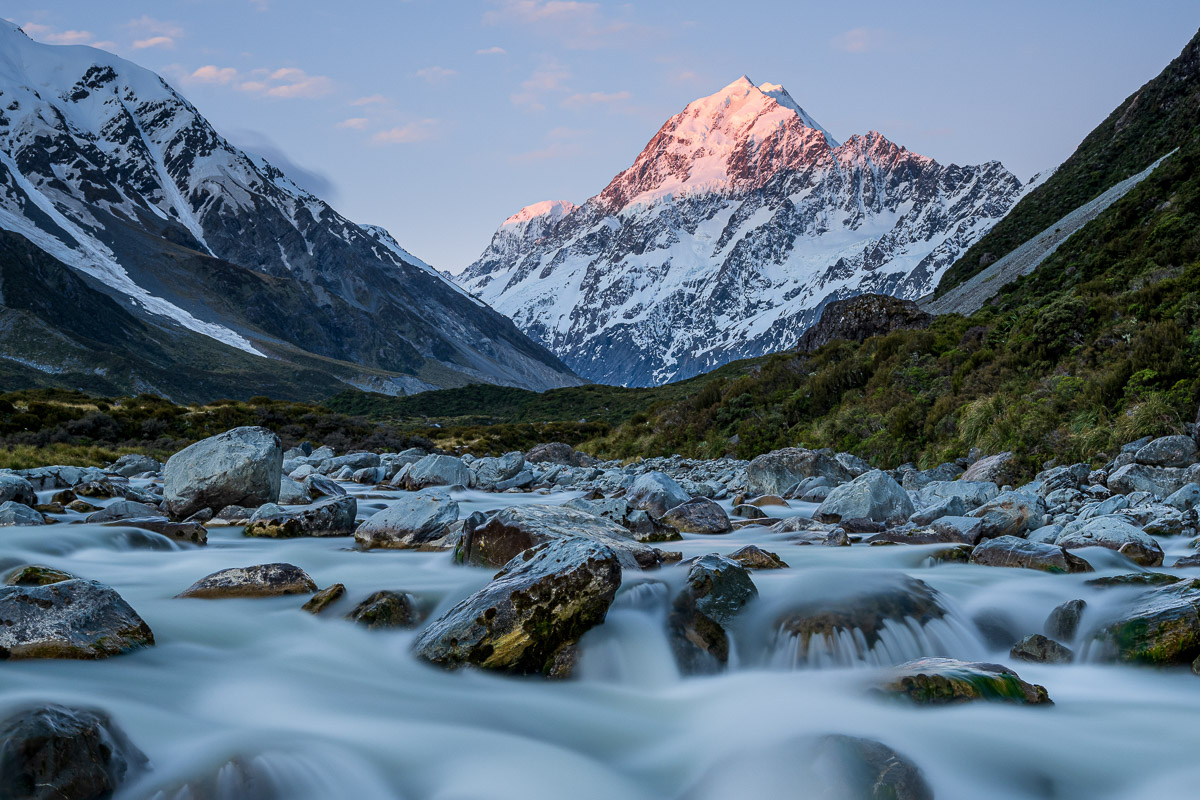
Timed for September, early spring in New Zealand, this tour catches the snow still covering the ranges around Aoraki Mt Cook and the Seaward Kaikōura Range rising white straight out of the ocean. Spring brings changeable weather, and with it the moving cloud, clearing storms and dramatic light that make the strongest landscape images. Travelling much of the length of the South Island, the subjects change as you go: glacial valleys and alpine lakes, volcanic sea cliffs, golden sand, limestone arches and beech forest.

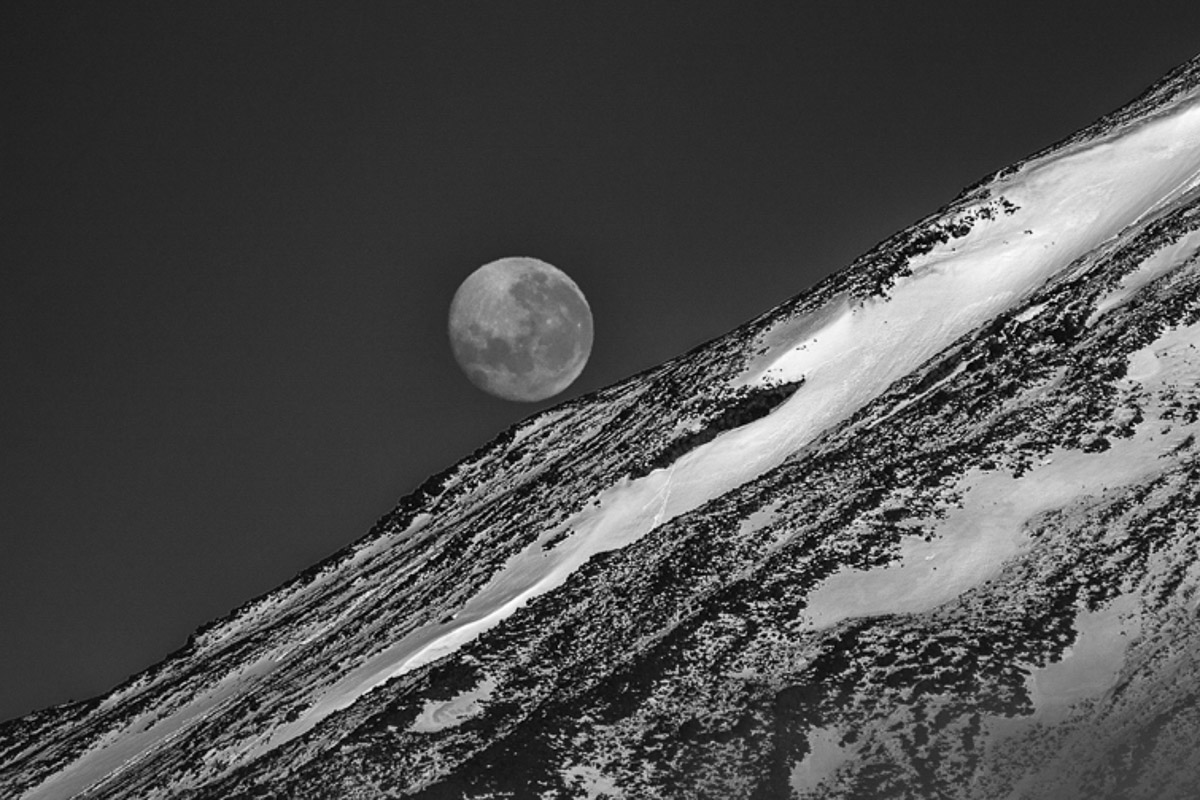
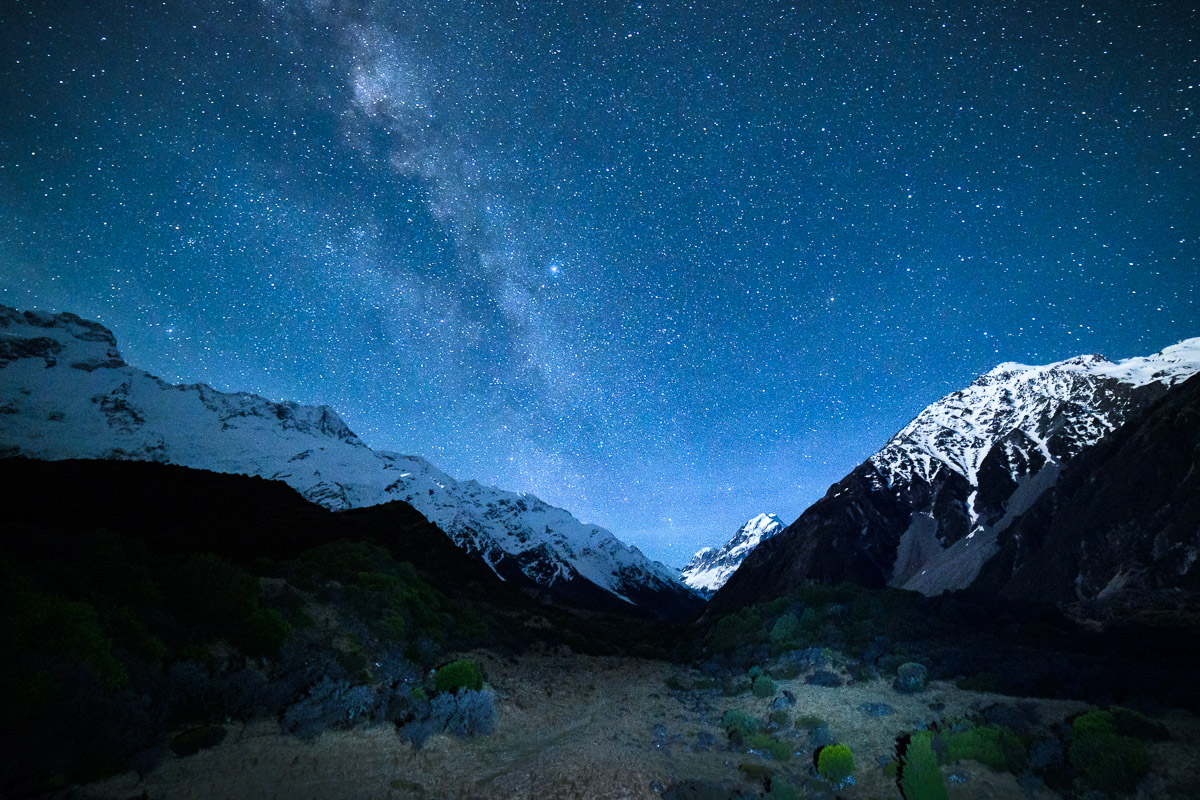
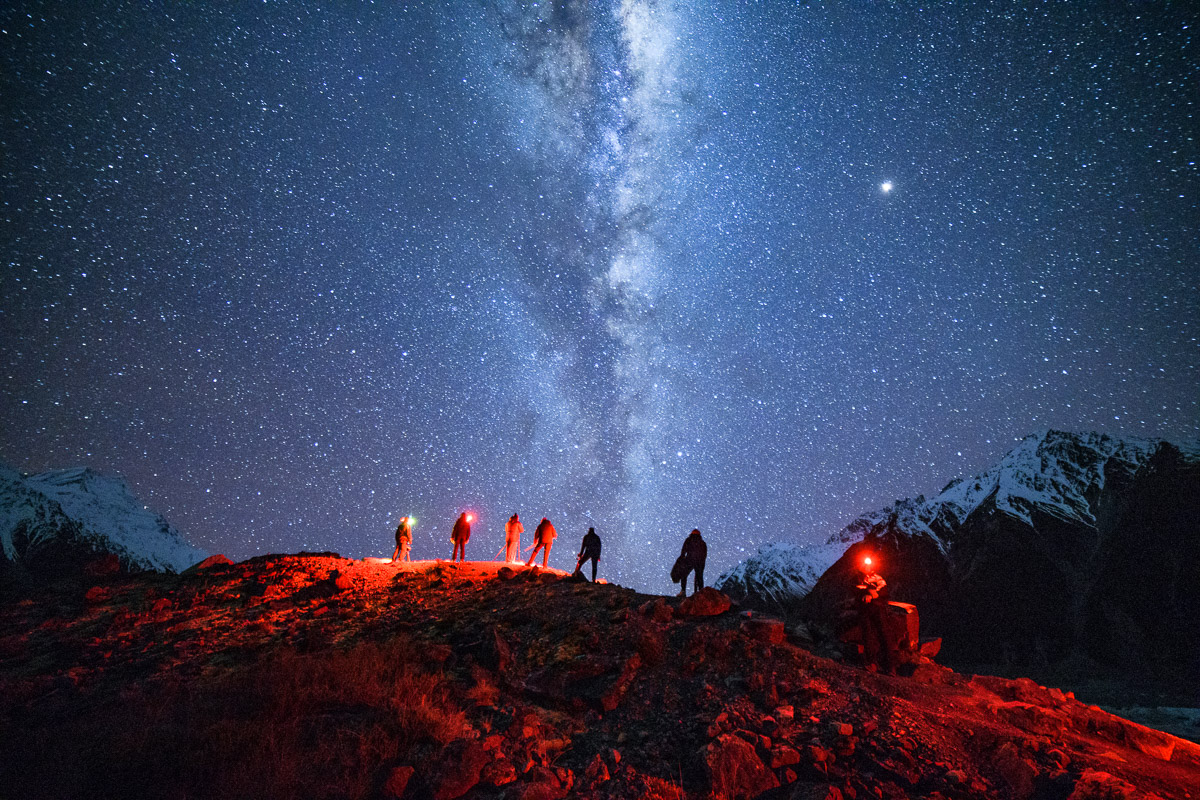
Rather than moving on every day, we spend three nights at Aoraki Mt Cook, three in Kaikōura and three in Golden Bay. That gives us time to return to locations, pick the best light windows and photograph whatever the conditions bring, with two tutors in the field beside you. The tour starts on the full moon, so at Aoraki Mt Cook you can photograph moonlit peaks and star trails, with darker evening skies for the Milky Way as the moon wanes later in the tour.



Tour Starts: Queenstown
16 September 2027: The tour starts in Queenstown with an early morning pickup. We can collect you from your Queenstown hotel or from Queenstown Airport, and travel through the Mackenzie Basin to Aoraki Mt Cook, arriving in time for lunch. If you would prefer to make your own way, you are welcome to meet us at The Hermitage at midday.
Days 1–3: Aoraki Mt Cook
Your tour begins with three nights at The Hermitage on our Night Sky & Landscape Photography Workshop with Glen Howey and Ben Wallbank. Aoraki Mt Cook Village sits inside the national park, ringed on three sides by the Southern Alps and surrounded by glacial valleys, moraine walls and alpine lakes. Above all of it is the Aoraki Mackenzie International Dark Sky Reserve, more than four thousand square kilometres of protected night sky and one of the largest and darkest of its kind in the world.
This is a landscape workshop as much as a night one. Through the day we photograph an alpine landscape where the light changes faster than you expect, and after dark we work with moonlit landscapes, star trails and the Milky Way. The tour starts on the full moon, so you will learn to use the moon as a light source and to read what a given night will offer. Tuition covers night sky and panoramic photography, and post-processing sessions in the conference room use your own images from the night before.
Being based in the village means our locations are minutes away rather than an hour’s drive, so we can go out late, come back, and go out again when the sky changes. Our locations are chosen on the day around the light, the cloud and where the moon sits — which is a good part of what you come here to learn.
After lunch on our final day at Aoraki Mt Cook we travel down through the Mackenzie Basin, where turquoise lakes and long open views give a very different sense of scale, and on across the Canterbury Plains to Christchurch for two nights, staying in the centre of the city on Cathedral Square.
The next day we head out onto Banks Peninsula to Akaroa, a historic French settlement on a harbour formed inside an ancient volcano. There is time to wander the village and waterfront, photographing heritage buildings, gardens and harbour views, before we join Black Cat Cruises on the Akaroa Nature Cruise, out beneath the harbour’s volcanic sea cliffs, where seabirds and marine wildlife are often seen. Glen and Ben stay with you through this day. It is a gentler day after the late nights at Aoraki Mt Cook, and a change of pace before the coast.
This morning Ken Wright and Matthias H. Risse take over from Glen and Ben for the coastal half of the tour. We take the inland road north to Kaikōura, stopping to photograph the high country and river valleys on the way — a part of Canterbury most visitors drive straight past — and arrive on the coast in time for sunset.
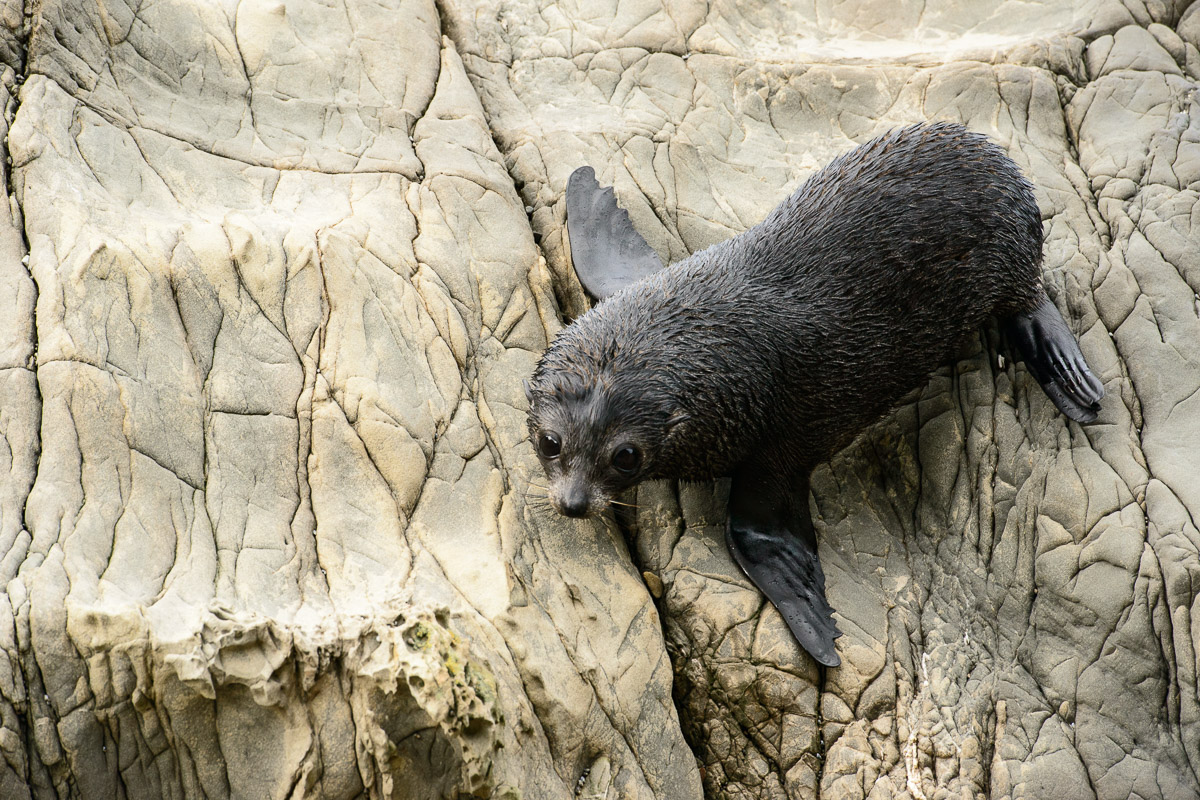
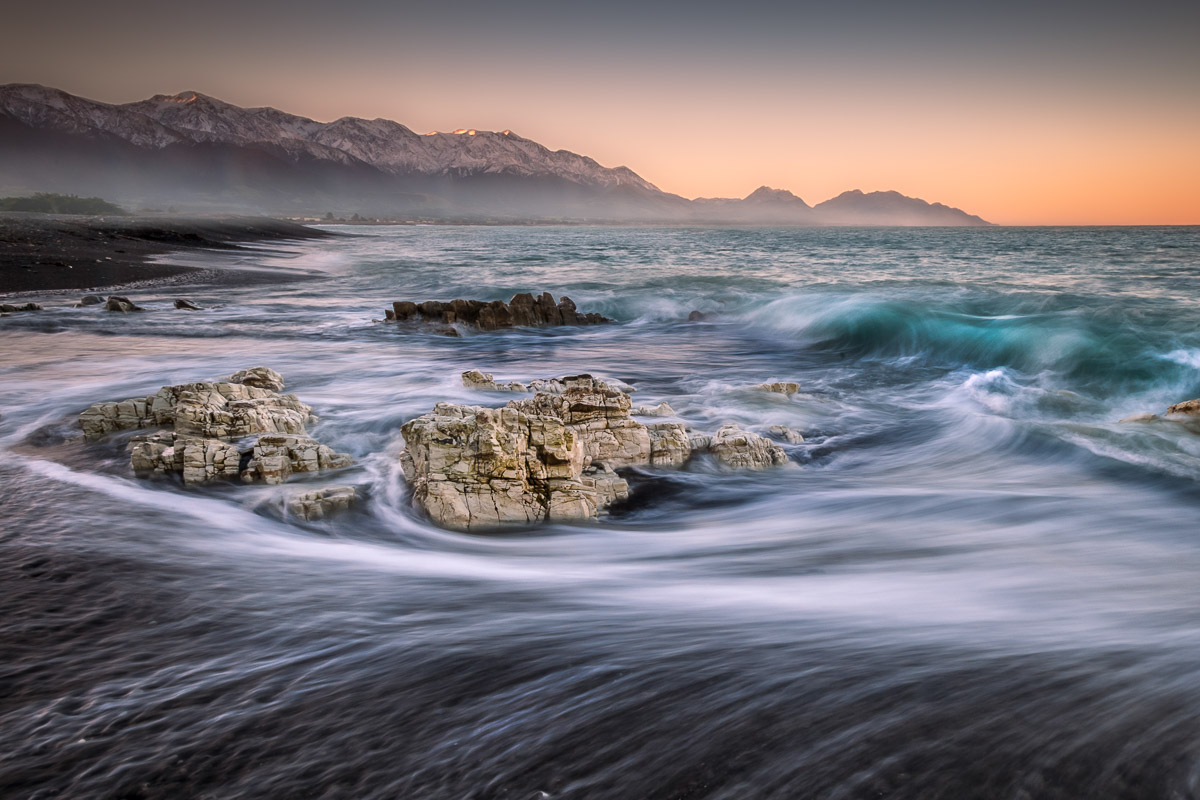
Kaikōura is where the mountains meet the sea, and three nights here give us the time to work it properly. The peninsula, the coastline north towards Mangamaunu and the Seaward Kaikōura Range behind, still under snow at this time of year, give us both sunrise and sunset options whichever way the weather turns. We head out on the Albatross Encounter boat to photograph albatross and other wildlife off the Kaikōura coastline, and New Zealand fur seals are a regular presence along the rocks.
An early start out of Kaikōura for a day that crosses the top of the island. We follow the coast north and stop to photograph along the Marlborough shoreline, then turn inland to a river running clear over rock through mature beech forest — a complete change of subject after three days of open coast, and a good one for slow shutter work. We continue west through Nelson and out along the bay, arriving in Collingwood in time to be out for sunset on our first evening in Golden Bay.
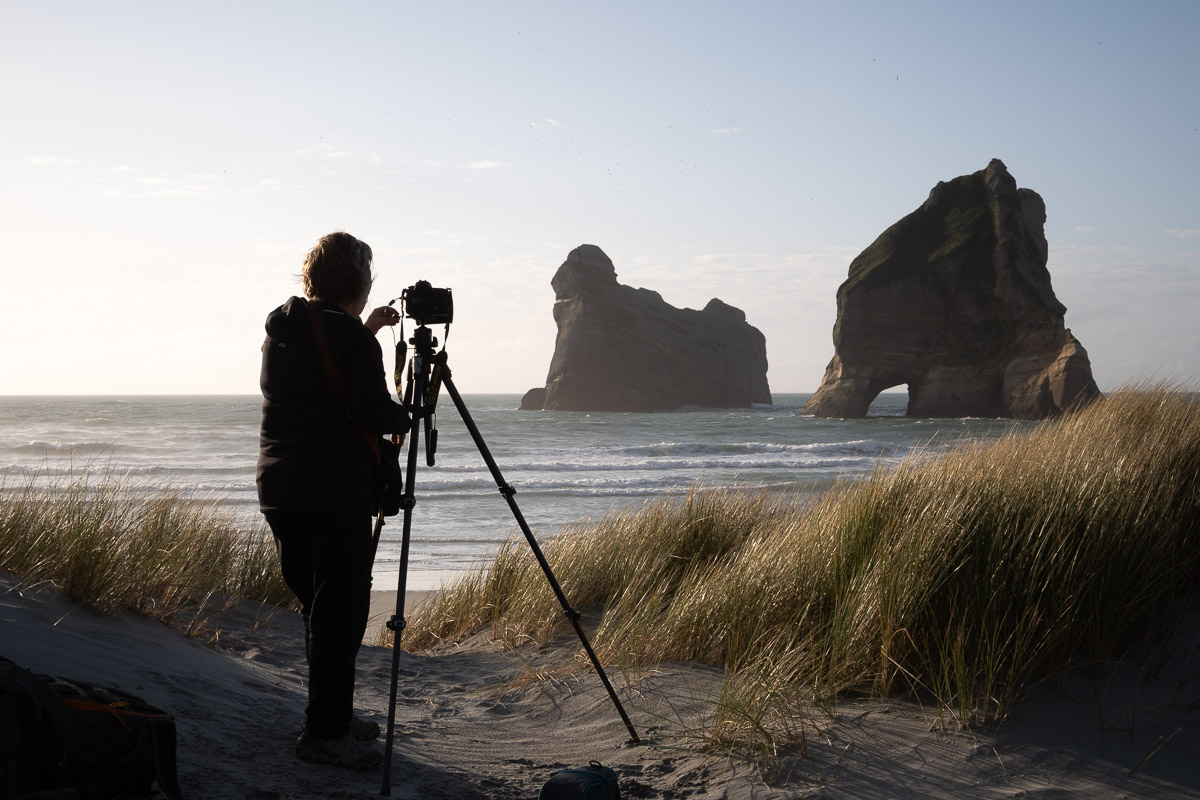
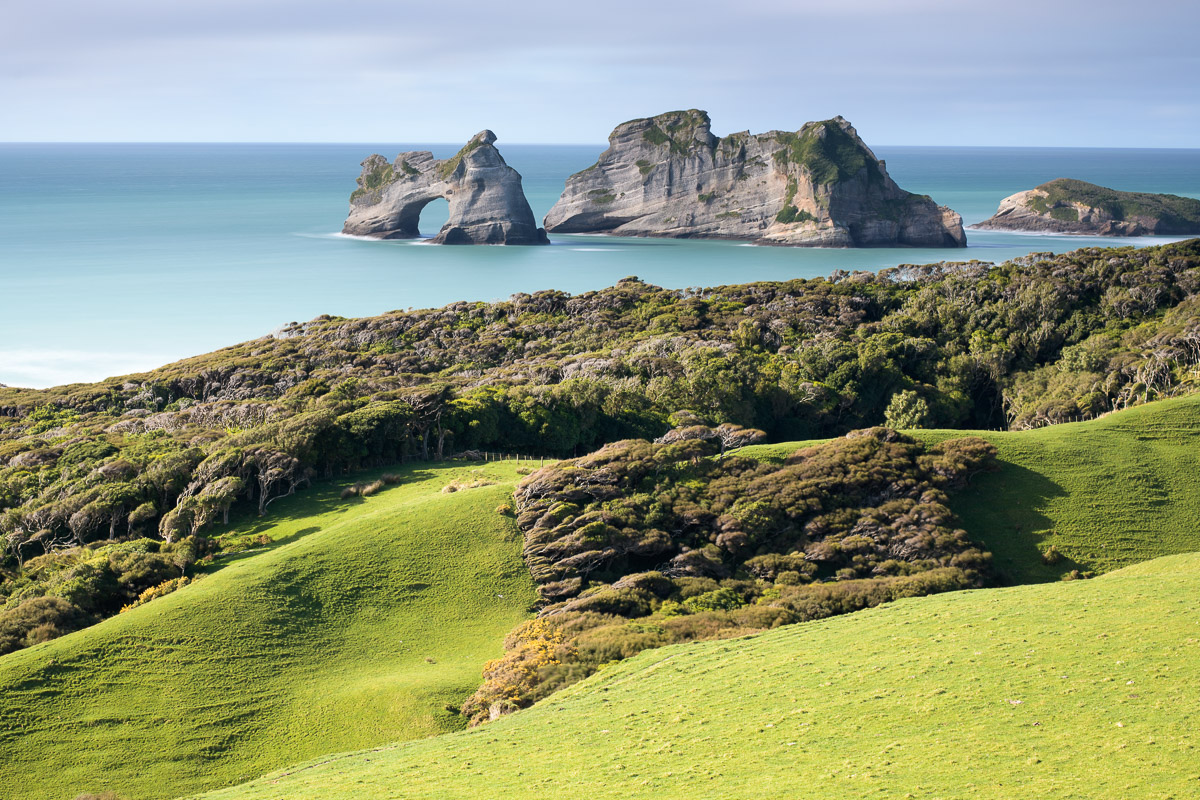
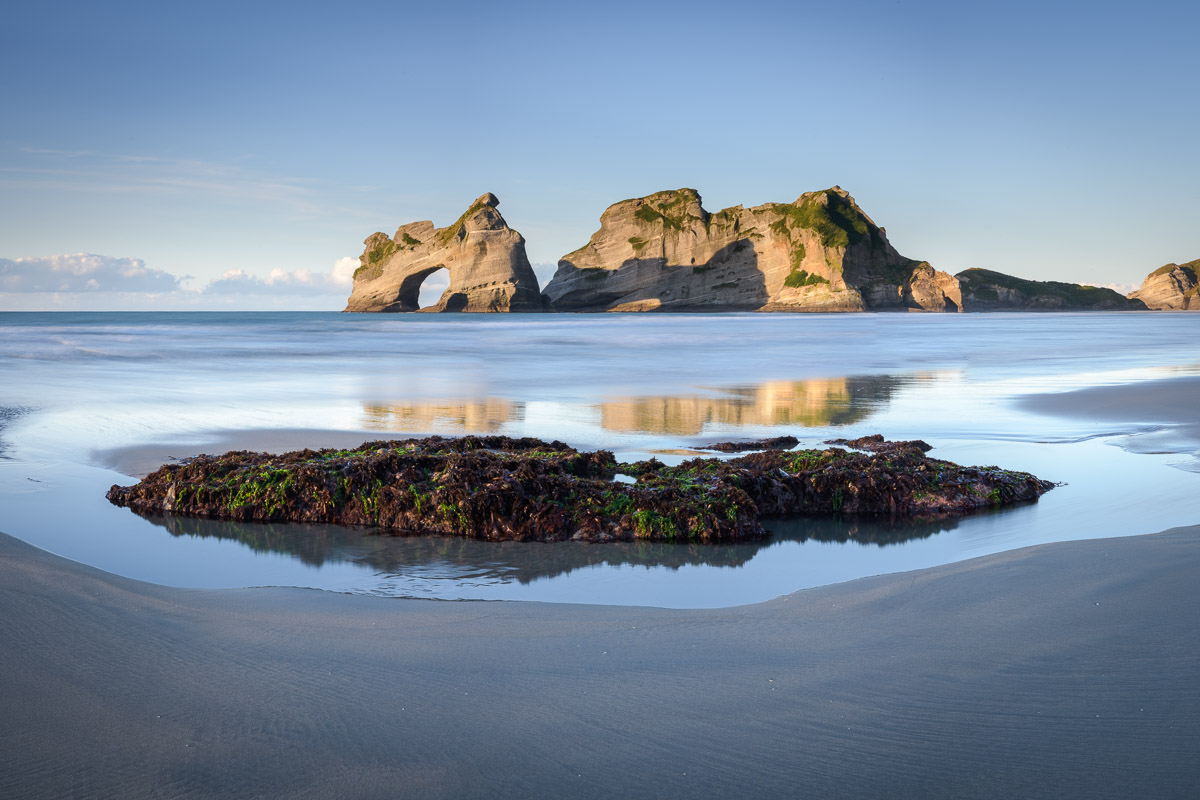
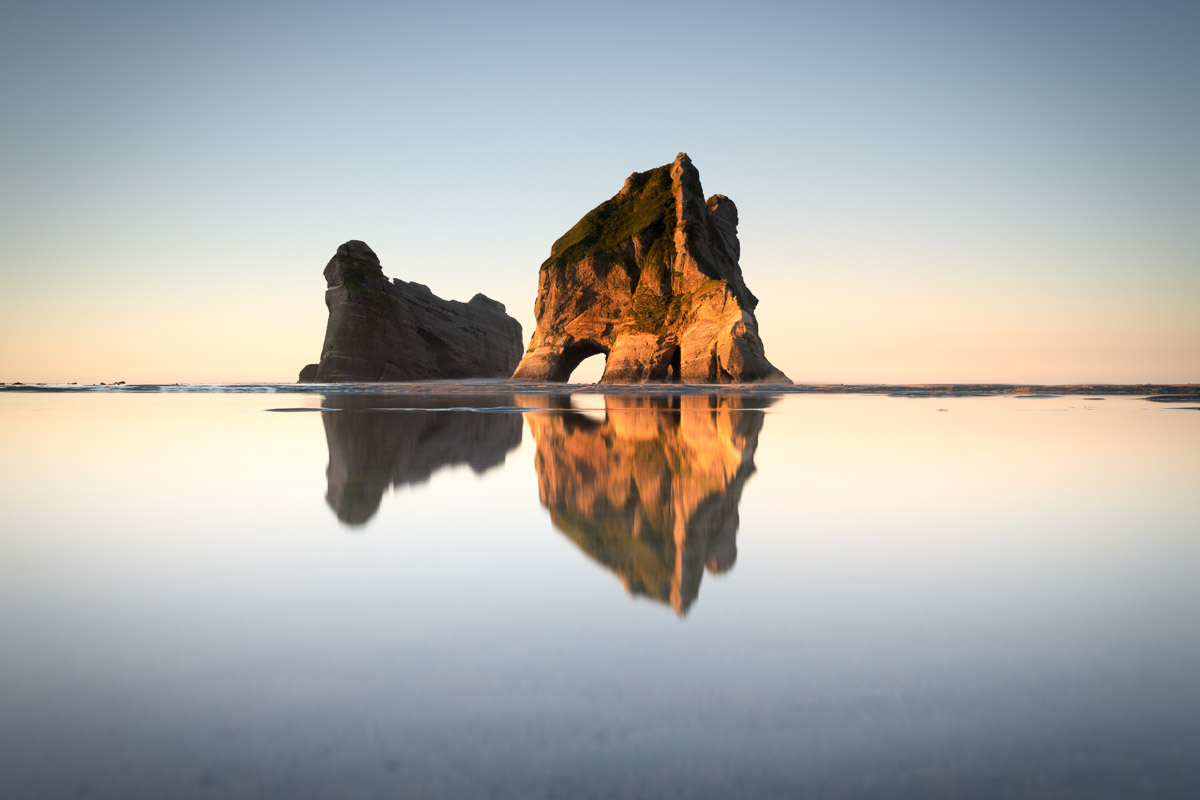
Three nights based at Collingwood let us photograph the Golden Bay coastline in depth, working sunrise and sunset across the region. A full day out to Wharariki Beach takes in the Archway Islands and the shifting dunes behind them, and there is a great deal more along this coast besides — Farewell Spit, the long tidal flats of the bay, and quieter beaches that reward an evening of their own.
Inland we turn to the limestone country and beech forest that sit behind the bay, adding texture, detail and intimate forest work to the wider coastal scenes. Between them these days build a varied and coherent set of images from a single region, and a fitting close to a tour that began among the highest peaks in the country. With the moon now rising late, clear evenings here also give us the option of night sky photography over the coast.
Tour Finishes: Nelson
27 September 2027: We will arrive at Nelson Airport at 3 pm in time for domestic flights departing from 4 pm. Please only book flights after 4 pm, or you will not make it to the airport on time. For international departures, please ensure you plan your flight departure allowing for the required check-in time requested by the airline.
Learn from four leading local New Zealand photographers throughout this tour.

Ken Wright’s seascapes speak for themselves, capturing outstanding moments of sunrise and sunset. With 40 years in creative industries, Ken is highly skilled in design, illustration and photography.

Glen has worked as a travel, documentary and landscape photographer for over 30 years. An educator at Massey University and The Photo School, he helps others connect with photography.

Matthias H. Risse is a photographer and technologist who has dedicated his career to exploring the intersection of nature, technology, and human experience.

Ben is a passionate guide and photographer dedicated to capturing the beauty of life through videography and photography.
A 15% deposit is required to reserve your space (deposit is non-refundable). The remaining balance is due 90 days prior to the start of the workshop.
Booking and Cancellation Policy: Please click here for our booking and cancellation policy.
No, but it shapes what we photograph. The tour starts on the full moon, so the Aoraki Mt Cook nights are given largely to moonlit alpine landscapes and star trails. As the moon wanes and rises later each night through the coastal half of the tour, clear evenings in Kaikōura and Golden Bay give darker skies for the Milky Way.
This tour runs with a maximum group size of 8, with two tutors in the field with you throughout. Across the twelve days you learn from four New Zealand photographers: Glen Howey and Ben Wallbank for the first five days at Aoraki Mt Cook and Akaroa, and Ken Wright and Matthias H. Risse for the final seven on the coast. Smaller groups of up to 5 may be led by one tutor.
Most locations involve a walk of 10 to 30 minutes each way along formed tracks, coastline or rocky beaches, sometimes uphill and over uneven ground, carrying your own equipment. At Aoraki Mt Cook some of that walking is in the dark, so we keep the pace easy and stay together. On the coast there are one or two longer options of 30 to 45 minutes each way, and we can split the group at these locations if that suits people better.
At Aoraki Mt Cook the rhythm is late nights and early mornings, with a deliberate gap in the middle of the day for rest and processing. The Akaroa day is a gentler one. On the coast we focus on being out in the best light, which often means starting before dawn and finishing after sunset, with time to rest through the middle of the day. Your tutors run through the following day’s plan each evening so you always know what to expect.
The daily schedule is set by the conditions rather than fixed in advance. At Aoraki Mt Cook, if cloud closes in we move to tuition and processing sessions indoors and go back out the moment conditions allow. On the coast, if a location is not working we swap it for one better suited to the weather that day — moving cloud and swell often give Wharariki and the Kaikōura coast far more character than a clear sky does.
This tour is about how to use your camera rather than what camera you own. You will need a camera that allows full manual control and a sturdy tripod, which is essential for both the night work and the long-exposure coastal work. Bring the widest and fastest lens you own for the night sky — around f/2.8 or faster is ideal, though f/4 still works — along with a wide-to-standard zoom, and a longer lens for the Akaroa cruise and the Albatross Encounter. Bring spare batteries and a head torch with a red light setting. A recommended equipment list can be found here.
Aoraki Mt Cook in mid-September sits below freezing overnight and we will be standing still for long stretches, so a proper insulated jacket, warm gloves you can operate a camera in and a hat matter a great deal. On the coast it will be early spring, so expect wind and cool mornings; warm layers, a waterproof outer and footwear you are happy to get wet are the essentials. Our recommended clothing list can be found here.
Yes. Sole occupancy and twin share are both offered on this tour — simply select which you would like when you book.
The tour includes 11 cooked breakfasts. Lunches and dinners are not included. We stop daily at local cafés or supermarkets for lunch, and a dinner reservation is arranged each evening at a restaurant.
Yes. New Zealand caters well for allergies, vegetarian, vegan and other dietary preferences, and we book group dinners at local restaurants each evening. Let us know your requirements when you book so we can pass them on to our accommodation and restaurants in advance.
Due to limited space in the vehicle there is a limit of two items per person: one 25 kg suitcase and one carry-on or camera bag.
Fly into Queenstown the day before the tour starts, as a delayed flight on the morning of day one cannot be waited for. At the end of the tour we arrive at Nelson Airport at 3 pm, so book domestic flights departing after 4 pm and allow the airline’s check-in time for international departures.
Most hotels on the tour provide wifi. There is no mobile coverage on Doubtful Sound and coverage through much of Fiordland is limited or non-existent, so plan to be offline for that part of the tour.
Yes. At Aoraki Mt Cook we run processing sessions in the conference room, and on the coast we fit image review around the times of day when the light is not suited to shooting. Bring a laptop, memory cards and a portable drive.